Why people in the UK check phone numbers: 2026 data
By the StoryCheck team · 6 min read · Published
Between 1 July and 28 September 2026, people in the UK started more than 18,000 phone lookups on StoryCheck. The reason they gave most often was private photos online (45%), followed by dating app activity (30%) and what people say about them (13%); only 7% said spam or scam callers were their main concern. Almost every number checked was a mobile (97%) and a UK number (96%).
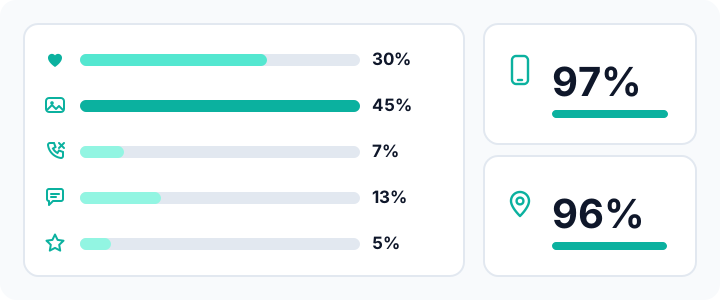
What did people in the UK want to know?
45%
Private photos online
The most common reason given in the UK
30%
Dating app activity
13%
What people say about me
7%
Spam or scam callers
5%
Reputation
When someone starts a lookup, the form asks what matters most to them, and they choose one answer. These figures are what people said they wanted to know. They are not findings about the people whose numbers were checked: 30% choosing dating app activity says nothing about how many of those numbers belong to someone who uses a dating app.
| Reason given | Share of UK lookups | What a phone lookup can realistically answer |
|---|---|---|
| Private photos online | 45% | Where a specific photo already appears publicly, through a reverse image search. Images on closed or private services are out of reach |
| Dating app activity | 30% | Public traces around the number, such as linked profiles and the WhatsApp photo. No tool can search inside a dating app |
| What people say about me | 13% | Web mentions and public profiles openly linked to the number |
| Spam or scam callers | 7% | Line type, network and risk signals, such as a VoIP or disposable line |
| Reputation | 5% | Public profiles and mentions linked to the number |
For the second biggest reason, our guide to finding dating profiles by phone number sets out what can and cannot be checked. The biggest, private photos, has its own section below.
How does the UK compare with other countries?
The UK stands out in two ways. No other market StoryCheck measured ranks private photos so high: 45% in the UK, against 37% in France and 36% in Australia, the next highest. And people in the UK are among the least likely to be checking a scam caller: 7%, compared with 34% in Belgium and the Netherlands, where landlines still make up a larger share of the numbers checked.
| Market | Private photos online | Dating app activity | Spam or scam callers | Mobile numbers |
|---|---|---|---|---|
| United Kingdom | 45% | 30% | 7% | 97% |
| France | 37% | 39% | 5% | 98% |
| Australia | 36% | 28% | 17% | 90% |
| Germany | 32% | 33% | 13% | 87% |
| Denmark | 29% | 40% | 8% | 100% |
| Norway | 26% | 45% | 8% | 97% |
| Netherlands | 26% | 25% | 34% | 82% |
| Belgium | 25% | 25% | 34% | 70% |
Dating app activity matters far more in Scandinavia, at 45% in Norway and 40% in Denmark, than in the UK at 30%. The closest match to the UK is France, where mobiles make up almost everything checked (98%) and scam callers are a minor reason (5%), although dating app activity leads there at 39%.
Which numbers do people in the UK check?
97% of the numbers checked from the UK were mobiles and 96% were UK numbers. That matters, because there is no public directory of UK mobile numbers, so the typical UK lookup is exactly the case where free searching runs out. It is also why a UK phone lookup leans on the line type, WhatsApp status and linked profiles rather than a name, which is often unavailable for a private 07 mobile.
Of the 4% of numbers from abroad, the largest group was North American: +1 numbers from the United States and Canada made up 26% of the foreign numbers checked. Ireland (5%), Spain (4%) and Poland (4%) came next.
When do people check a number?
Checks peak in the afternoon, between 14:00 and 17:00 local time, a pattern StoryCheck sees in every market it measured, the UK included. The busiest hours are mid-afternoon, not late at night.
What can you do if you are worried about private photos online?
Because this is the single biggest reason people in the UK give, it deserves a direct answer. A phone lookup cannot search private messages, closed groups or intimate images, and nothing lawful can. These are the routes that do help:
- In England and Wales, sharing or threatening to share an intimate photo or film of someone without their consent is a criminal offence under section 66B of the Sexual Offences Act 2003. Report it to the police on 101, or 999 in an emergency.
- The Revenge Porn Helpline (0345 6000 459) is a UK service supporting adults affected by intimate image abuse.
- StopNCII.org creates a digital fingerprint, called a hash, of an image on your own device without uploading the image itself, so that participating platforms can find and remove matching copies.
- To see where a particular photo already appears publicly, a reverse image search finds exact and lightly edited copies, without facial recognition.
How was this data collected?
The figures come from anonymous, aggregated phone lookups started on StoryCheck by visitors located in the United Kingdom (by IP address) between 1 July and 28 September 2026, more than 18,000 in total. The reason is the answer each person chose when the lookup form asked what mattered most to them. The line type and the country of each number come from the telephony data at the time of the lookup. Percentages are rounded, so a set of figures can add up to 99% or 101%. No individual lookup or number can be identified from these figures. If you cite them, please credit StoryCheck lookup data, July to September 2026.
Common questions
Why do people in the UK look up phone numbers?
In StoryCheck lookup data from July to September 2026, the most common reason UK users gave was private photos online (45%), followed by dating app activity (30%), what people say about them (13%), spam or scam callers (7%) and reputation (5%).
Do these figures show how many partners are on dating apps?
No. They show what people said they wanted to know when they started a lookup, not what any lookup found. A person choosing dating app activity tells you about their concern, not about the person whose number they checked.
Why are almost all the numbers checked mobiles?
The data records which numbers were checked, not why, but the pattern is clear: 97% were mobiles and 96% were UK numbers. That is also why UK reports often show no name: there is no public directory of UK mobile numbers, so a name only appears where a number has been linked to one in licensed or public sources.
Can I use these statistics?
Yes. Please cite them as StoryCheck lookup data, July to September 2026, and link to this page. The figures are anonymous and aggregated, based on more than 18,000 lookups started from the UK.
Related guides
Find out who is really behind the number
The check is private and takes about 60 seconds. The person is not notified and never finds out you looked.
Check a number now